


 DENTIST REFERRALS
  020 7602 2200
 Jun 23, 2026
Fixed braces vs Invisalign®: which is best for your smile goals?
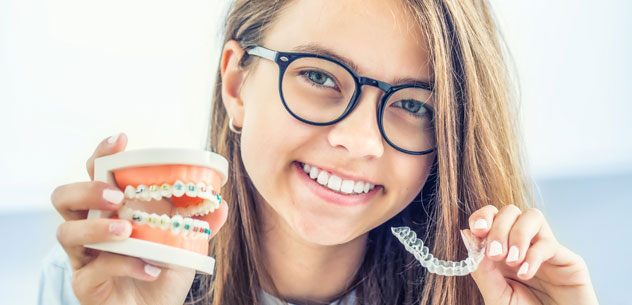
Short answer: both fixed braces and Invisalign® can achieve excellent results. The best option depends on how your teeth need to move, how visible you want treatment to be, how much day-to-day responsibility you are happy to take on, and practical factors like sport, music and appointment preferences.
At Orthosmile, treatment is Specialist-led and never one-size-fits-all. We use ceramic or metal braces, Invisalign®, and other systems, then plan the most suitable route for your goals and lifestyle.
This guide compares what matters in real life, from crowding and bites to comfort, visibility, hygiene, breakages, visit frequency, timelines and indicative costs. Use it to narrow your preferences, then contact us to discuss your case with a Specialist.
What Each Option Does Best
Both systems can treat crowding, spacing, overbite, underbite and crossbite. Success often comes down to case selection and precise planning.
Fixed Braces: Great All-Rounders
Brackets and wires give continuous control, which can be helpful for significant rotations, vertical changes, complex bite corrections and when 24-7 force is useful. Ceramic braces blend with tooth colour for lower visibility.
Invisalign®: Clear, Removable Aligners
Invisalign® uses clear, removable aligners created from a 3D scan. They are especially popular for mild to moderate crowding or spacing, alignment of the front teeth, and many bite issues. Attachments and elastics can expand what is possible.
Consistent wear is essential.
For complex tooth movements or when patient compliance may be difficult, fixed braces are often recommended. For patients who value low visibility and removability, and who can commit to full-time wear, Invisalign® is often an excellent choice.
Visibility and Day-to-Day Appearance
Metal Braces
Visible up close and in photos, though modern brackets are smaller than older designs.
Ceramic Braces
Tooth-coloured brackets that are far less noticeable than metal. The wire is still visible, but overall the look is more discreet.
Invisalign®
Clear aligners are very low profile. Small tooth-coloured attachments may be visible at certain angles, but most people notice them only at close range.
If discretion for milestones like weddings, graduations or professional events is your top priority, Invisalign® or ceramic braces tend to be preferred.
Comfort, Hygiene and Eating
Fixed Braces
Light tenderness after adjustments is common. Brackets can rub initially, and orthodontic wax helps. Cleaning requires care around brackets and wires, with interdental brushes and floss threaders.
Some hard or sticky foods risk breakages, so diet adjustments may be needed.
Invisalign®
Smooth aligners are typically comfortable after the first few days of each new set. You remove them for meals, which makes cleaning teeth straightforward.
Aligners need twice-daily cleaning with a soft brush and cool water, and you should avoid hot water or coloured mouthwashes that can warp or stain trays.
If you want to keep your normal diet and brushing routine, Invisalign® often fits more easily. If you prefer a fixed option that keeps you "always in treatment" without remembering wear time, braces may suit you.
Breakages, Repairs and Reliability
Fixed Braces
- Wires can loosen
- Brackets can debond
- Ligatures can break
- Most issues are manageable with quick repairs
Use wax for any rubbing, and avoid hard foods if a bracket loosens until you are seen.
Invisalign®
- Losing an aligner can delay progress
- Inconsistent wear can affect results
- Lost aligners may require reverting to the previous tray temporarily
Both systems are reliable when used as directed. The key difference is responsibility: braces are fixed and work 24-7, while aligners rely on you to wear them as prescribed.
Appointment Frequency and Remote Monitoring
Fixed braces usually need in-clinic adjustments every 6 to 10 weeks.
With Invisalign®, visits can be spaced out more depending on case complexity, particularly when remote monitoring is used to track progress between visits.
At Orthosmile, orthodontic therapists support efficient adjustments for braces, while Invisalign® patients can benefit from remote monitoring to reduce time away from work or school where appropriate.
If you want the fewest in-person appointments, Invisalign® with remote monitoring often provides that flexibility. If you prefer regular check-ins and hands-on adjustments, braces deliver that rhythm.
Lifestyle Fit for Sport, Music and Big Moments
Sport
Invisalign® aligners are mouthguard-friendly since you remove them to wear a dedicated guard. Braces are suitable too, but a sports mouthguard designed to fit over brackets is recommended.
Music
Wind and brass players often find Invisalign® easier because aligners are removable for practice. Braces are manageable but may take an adjustment period.
Milestones and Media
For photos, public speaking and special occasions, many people prefer Invisalign® or ceramic braces due to lower visibility.
Typical Treatment Times and Indicative Costs
Timelines and pricing vary by case complexity and goals.
Fixed Braces
Typically 12 to 24 months. Costs vary with case length and whether you choose metal or ceramic brackets. You will receive a clear quote after Specialist assessment.
Invisalign®
Often 6 to 18 months for mild to moderate cases, with complex cases taking longer. Pricing varies with the number of aligners and refinements.
Orthosmile provides a transparent, personalised quote after full assessment.
How Orthosmile Helps You Choose Objectively
Specialist-Led Planning
Your treatment is planned by experienced Specialist Orthodontists, and care is delivered by a multidisciplinary team where needed.
Multiple Systems, Not One-Size-Fits-All
We use metal braces, ceramic braces, Invisalign® and other appliances, so recommendations stay aligned to your needs rather than a single product.
3D Scanning and Previews
You can see a visual simulation of proposed changes before you commit.
Invisalign® Experience
As a high-volume provider, our team has deep knowledge of aligner biomechanics and remote monitoring workflows.
Efficient Appointments
Orthodontic therapists support adjustments and maintenance under Specialist supervision, helping keep visits focused and convenient.
Ready to explore what will work best for your smile and schedule? Start with a Specialist assessment to review your options and receive personalised advice.
For adults comparing treatments, you may find our page on braces for adults helpful as background before you visit.
FAQ
Are fixed braces or Invisalign® better for my case?
It depends on the exact tooth movements required and your preferences. Braces are excellent for complex corrections and continuous control. Invisalign® is discreet and convenient if you can commit to wear time. A Specialist assessment will outline what is suitable for you.
How visible are ceramic braces compared with clear aligners?
Ceramic braces are less noticeable than metal and blend with tooth colour. Invisalign® aligners are the least visible day to day, though small attachments may show at certain angles.
Which option needs more in-clinic appointments?
Braces generally require more frequent in-person adjustments. Invisalign® can often be monitored remotely between visits, which may reduce clinic time.
What are typical treatment times and costs for each?
Braces commonly take 12 to 24 months. Invisalign® often ranges from 6 to 18 months for mild to moderate cases. Costs vary with complexity and will be confirmed after assessment with a transparent quote.
How does Orthosmile help me choose objectively?
You will see a Specialist Orthodontist who assesses your bite, crowding and goals, uses 3D scans to model changes, and recommends braces, Invisalign® or a combined approach based on what will be predictable and practical for you.
Next Steps
If you are looking for an orthodontist in West London, you can explore Orthosmile’s clinics and get in touch to book an appointment or ask about availability.
If you are considering Invisalign® in London, our adult aligner page explains how treatment works and what day-to-day life looks like.
If Kensington is convenient, find contact details and directions for the Orthosmile Kensington team.
Summary
Both fixed braces and Invisalign® can create a confident, healthy smile.
Braces offer constant control and are often best for complex movements. Invisalign® provides low visibility, easier hygiene and, with remote monitoring, fewer clinic visits.
The right choice depends on your clinical needs, commitment to wear time and lifestyle.
Book an appointment with Orthosmile to compare your options and receive a clear, personalised plan.
Find us
Choose the location nearest you from the drop-down list below.
Kensington
Visit our cutting-edge Orthosmile practice in Kensington (also known as The Kensington Orthodontic Clinic). We are accepting new patients of all ages.
 8-10 Netherwood Road,
London
W14 0BJ
 kensington@orthosmile.co.uk
 Opening Times
- Monday - Friday
- 09:00am – 7:00pm
- Saturday
- 09:00am – 5:00pm Alternate Saturdays
- Sunday
- Closed
- Closed between
- 13:00 - 14:00pm for lunch break
GDC information
Tel: 0854 222 4141
Fax: 022 7224 3294
Email: information@gdc-uk.org
Site: www.gdc-uk.org
 Open in Google Maps
Earl's Court
Orthosmile offers world-class orthodontic, periodontic, endodontic, and paediatric dental care at our modern Earl’s Court practice. Visit our team just across from the Earl’s Court post office.
233 Earl's Court Road,
Earls Court
London SW5 9AH
Opening Times
- Monday
- 09:00am - 7:30pm
- Tuesday
- 09:00am – 6:00 pm
- Wednesday
- 09:00am – 7:30 pm
- Thursday
- 09:00am – 7:30 pm
- Friday
- 09:00am – 5:30 pm
- Saturday
- 09:00 am - 5:00 pm Alternate Saturdays
- Sunday
- Closed
- Closed between
- 13:00 - 14:00pm for lunch break
GDC information
Tel: 020 8814 1422
Fax: 022 7224 3294
Email: information@gdc-uk.org
Site: www.gdc-uk.org
Hounslow
At our Orthosmile practice in Hounslow, we pride ourselves on our expertise, professionalism and customer care. We look forward to helping create your beautiful new smile.
230 Staines Road,
Middlesex
London TW3 3LR
Opening Times
- Monday - Tuesday
- 09:00 am - 6:00 pm
- Wednesday - Thursday
- 09:00 am - 6:30 pm
- Friday
- 09:00 am - 6:00 pm
- Saturday
- 09:00 am - 5:30 pm Alternate Saturdays
- Sunday & Bank Holidays
- Closed
- Closed between
- 13:00 - 14:00pm for lunch break
GDC information
Tel: 020 8814 1422
Fax: 022 7224 3294
Email: information@gdc-uk.org
Site: www.gdc-uk.org